The First Ingredient: Water, Food, and the Future of Ghana
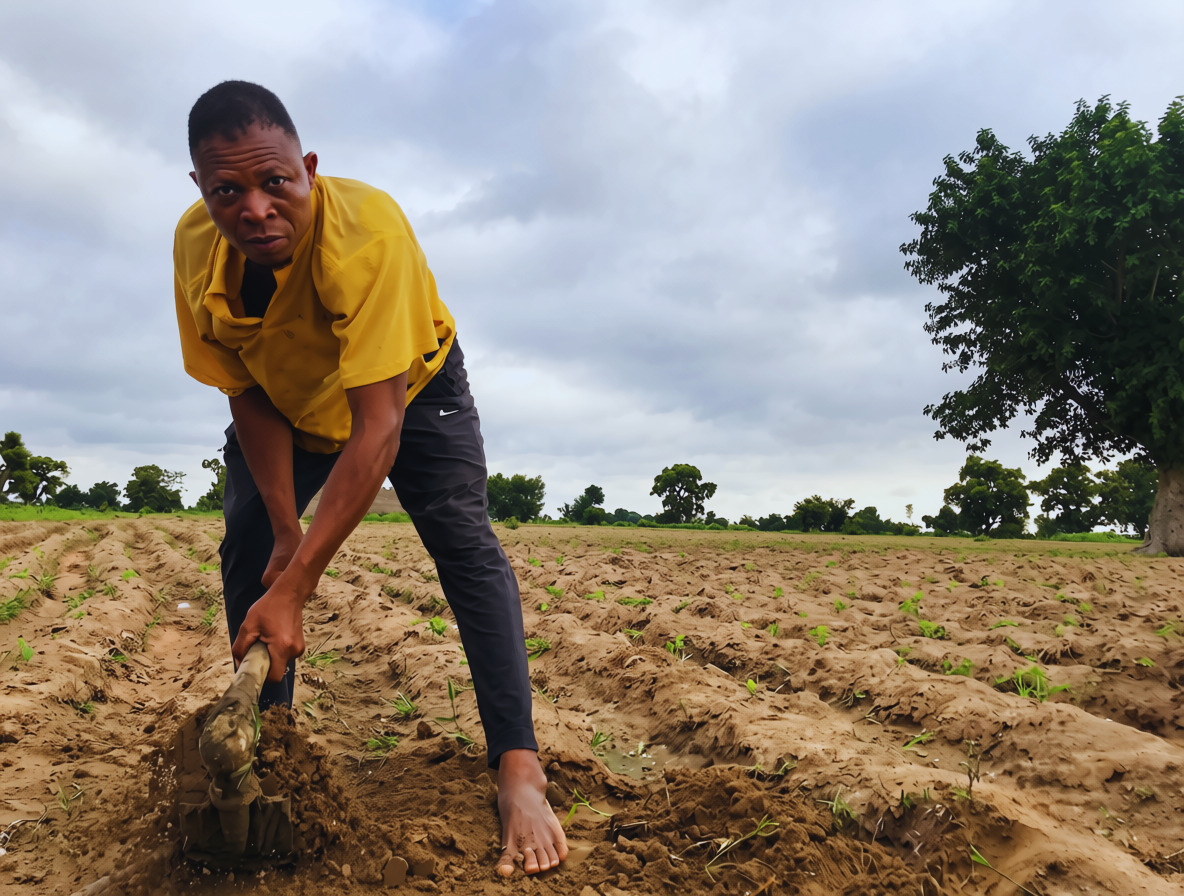
Rashid Azonko always knew how to grow vegetables. What he did not have was water.
In Laansa, a community of 1,450 people in the Bawku Municipality of Ghana’s Upper East Region, that was the end of the matter. Knowledge and a patch of ground count for nothing if there is no water close enough to carry, day after day, through a growing season.
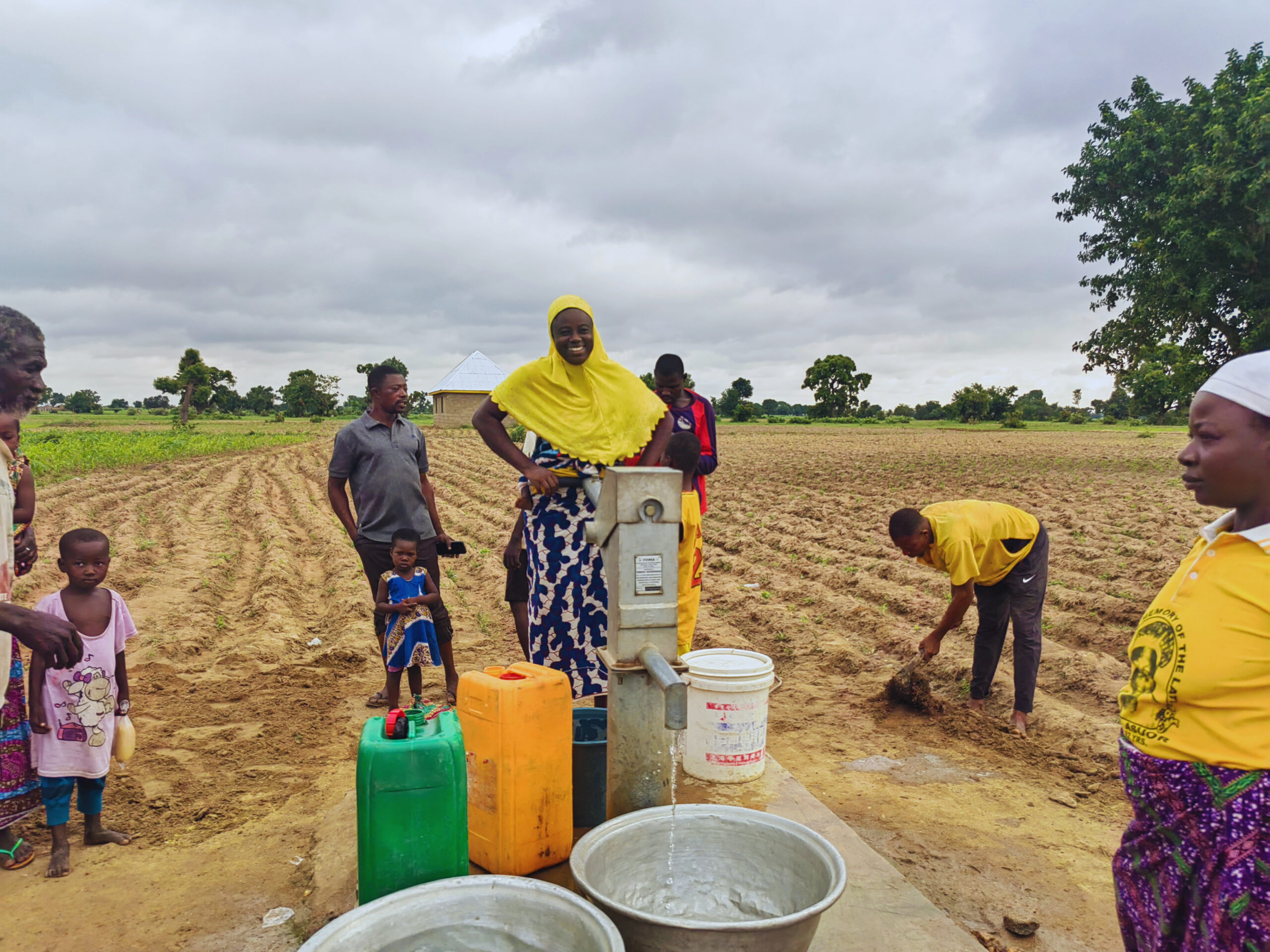
Then the borehole arrived, and Rashid planted right beside it.
Water is the first ingredient
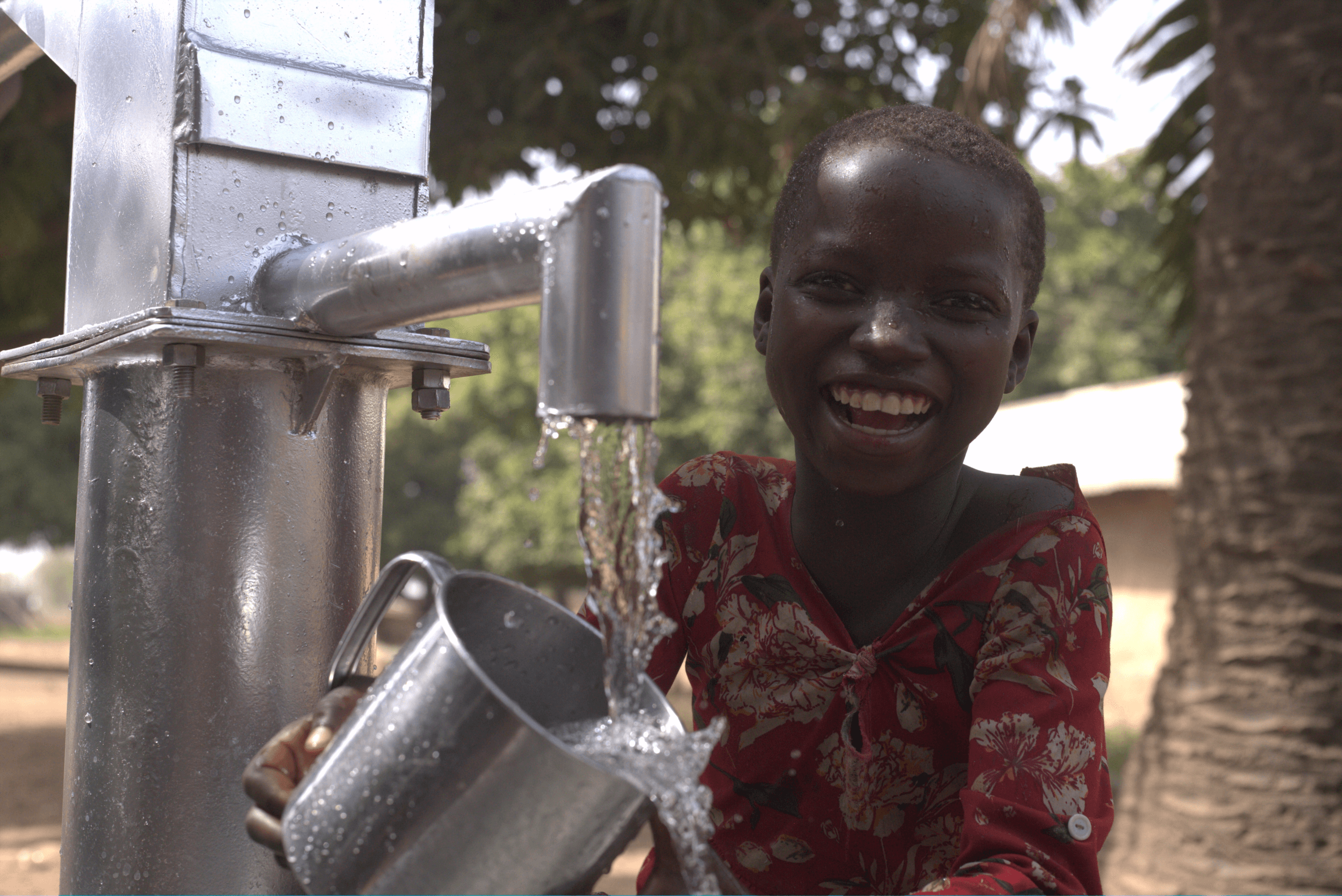
Across Northern Ghana, farming is not a sector of the economy. It is the economy. Yet in most rural communities, growing food depends entirely on the rains, and everything else – cooking, washing, watering seedlings, keeping animals- depends on whatever water a family can carry home that day.
That single constraint shapes everything downstream. Vegetables can only be grown for a few months of the year. School meals are limited by what can be sourced and prepared. Children arrive in class already tired and already thirsty. Girls miss lessons altogether on the days the water must be fetched.
Ghana’s national Feed Ghana Programme, launched in 2025, sets out an ambitious agricultural vision for the country: school-based farms, revived poultry production, youth training in fish farming, and stronger value chains for crops like maize, soybean, tomato, onion and pepper.
Nothing on that list happens without water.
Growing is only half of it
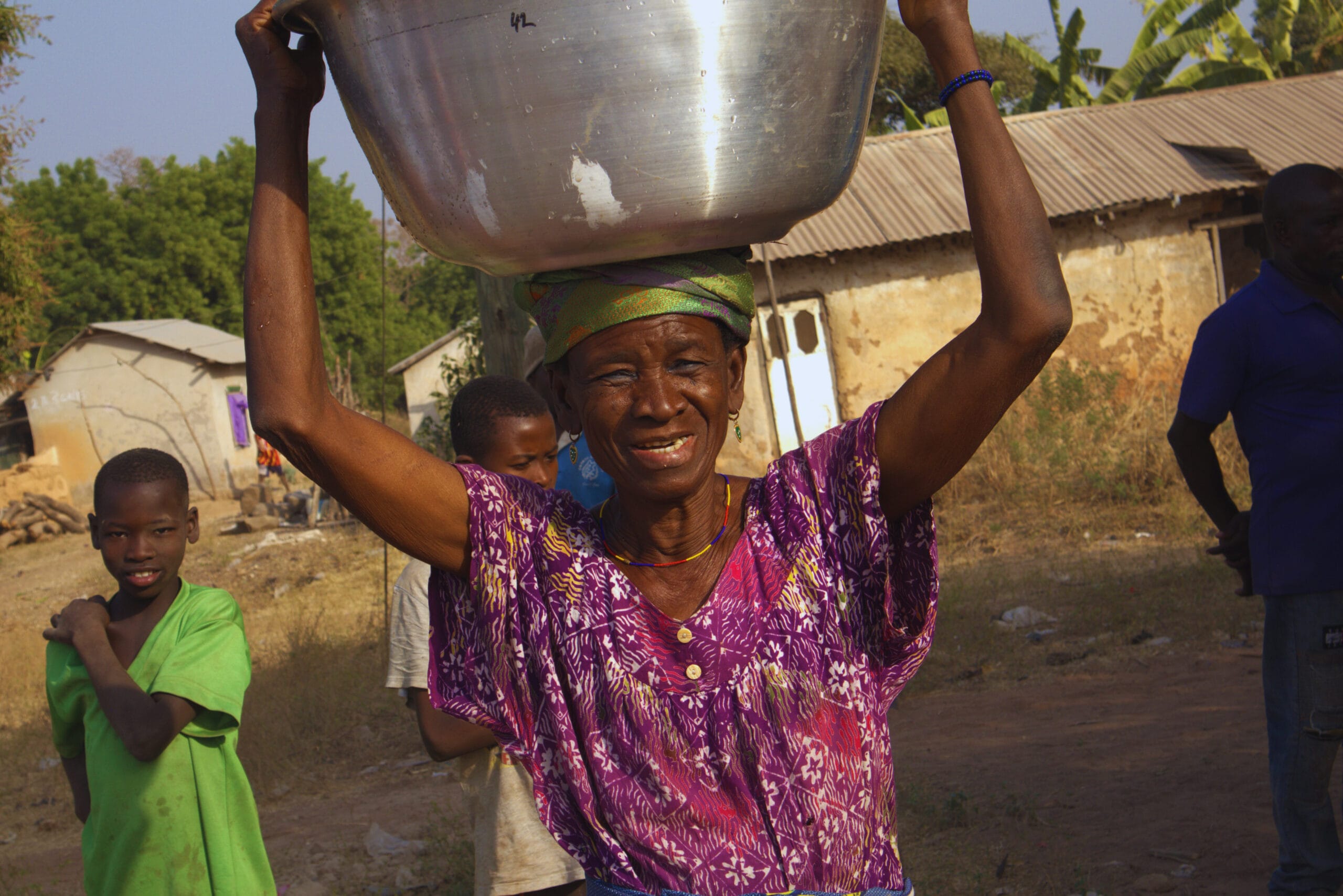
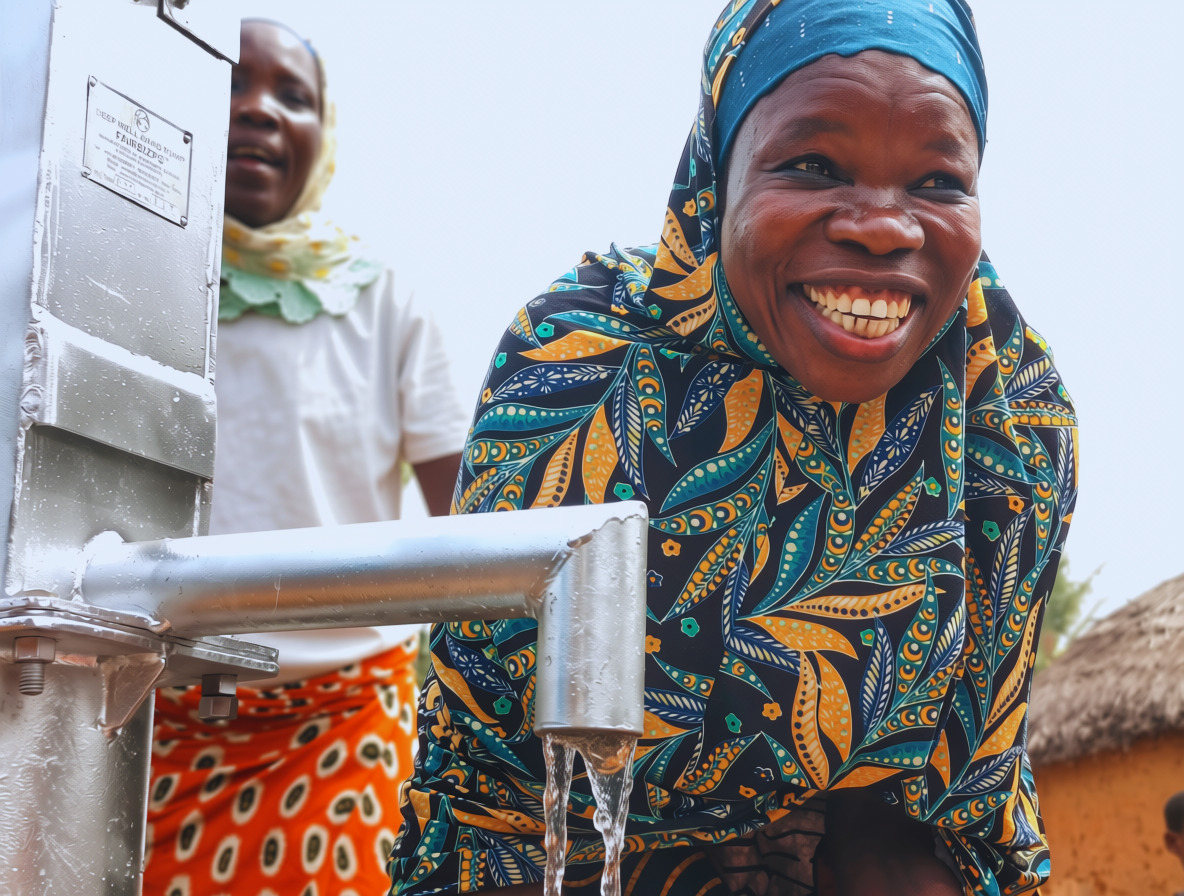
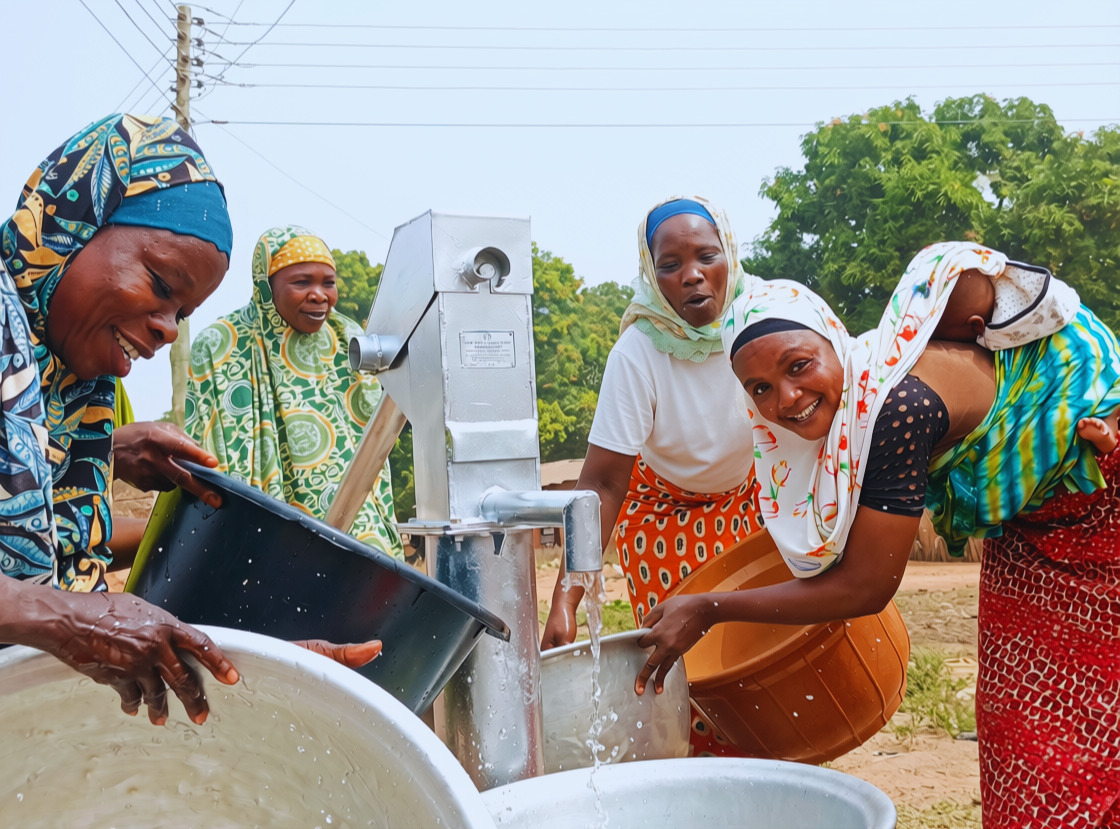
The market in Binda runs late into the afternoon, and for years the women of this farming community could not stay to the end of it. Yams and grains still spread out unsold, they had to pack up early and start for water before darkness fell. Whatever they might have earned in those last hours was simply lost.
Zenabu (pictured below) is the Magajia, the women’s leader in Binda, a community of 1,260 people in the Nanumba District. Since the new borehole arrived, they can stay to the end. Food security is rarely only about growing more. It is about being able to sell what you have grown, at the hour the buyers are still there.
It starts with school
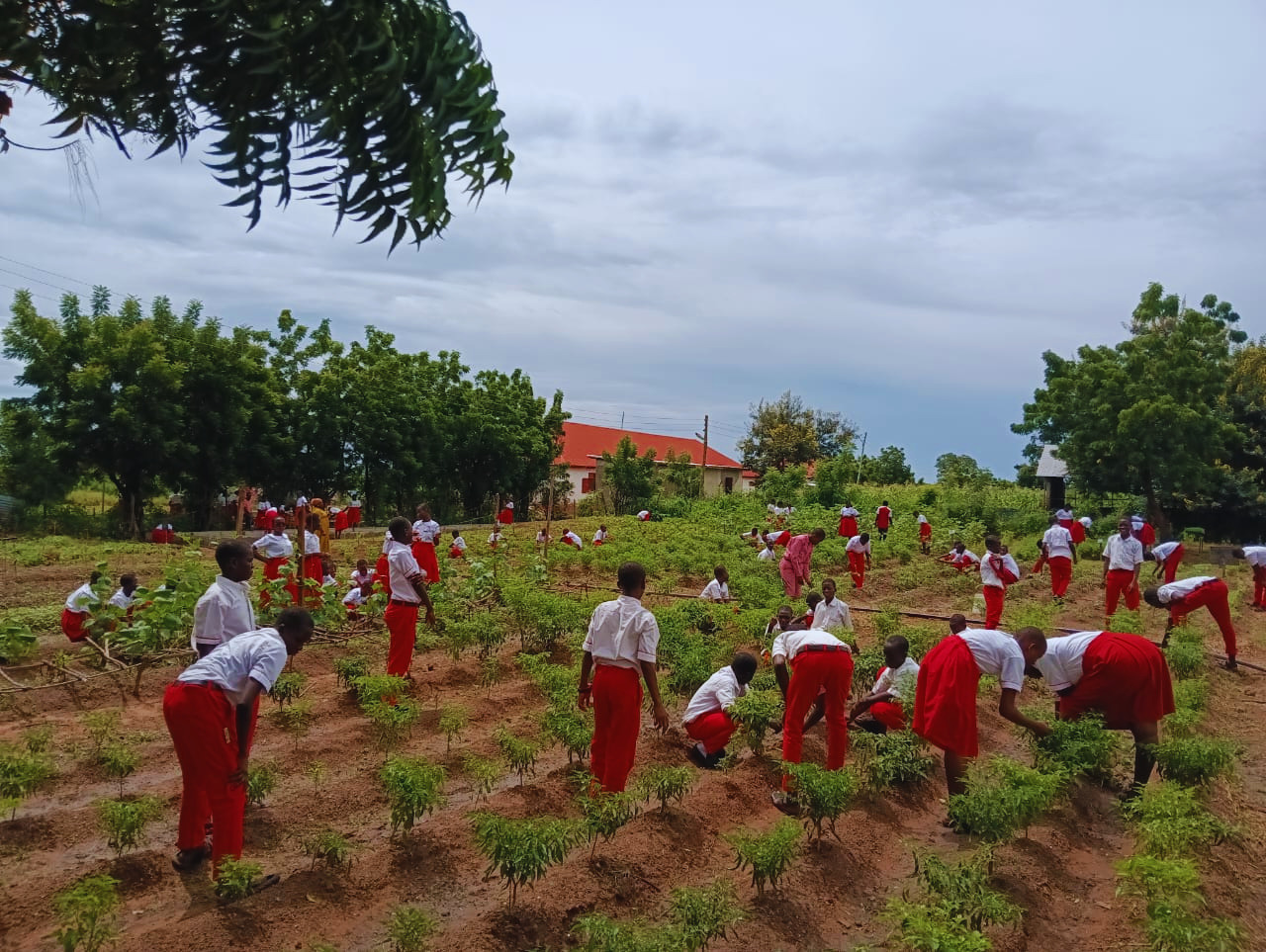
A school is often the natural place for clean water to begin its work. Where a borehole stands on school grounds, children can drink and wash their hands throughout the day, attendance improves, and girls who once missed lessons to fetch water can stay in school. But a school with water can do more than keep children healthy; it can grow food. A reliable source on site makes a school garden possible, and from there each addition strengthens the next: gardens feed the children, poultry and fish ponds add eggs and protein, and the pond water can be reused to irrigate the crops.
The result is a cycle that feeds itself:
- Water supports fish farming
- Fish farming supports irrigation
- Irrigation supports agriculture
- Agriculture supports nutrition
- Nutrition supports learning
- Education supports stronger communities
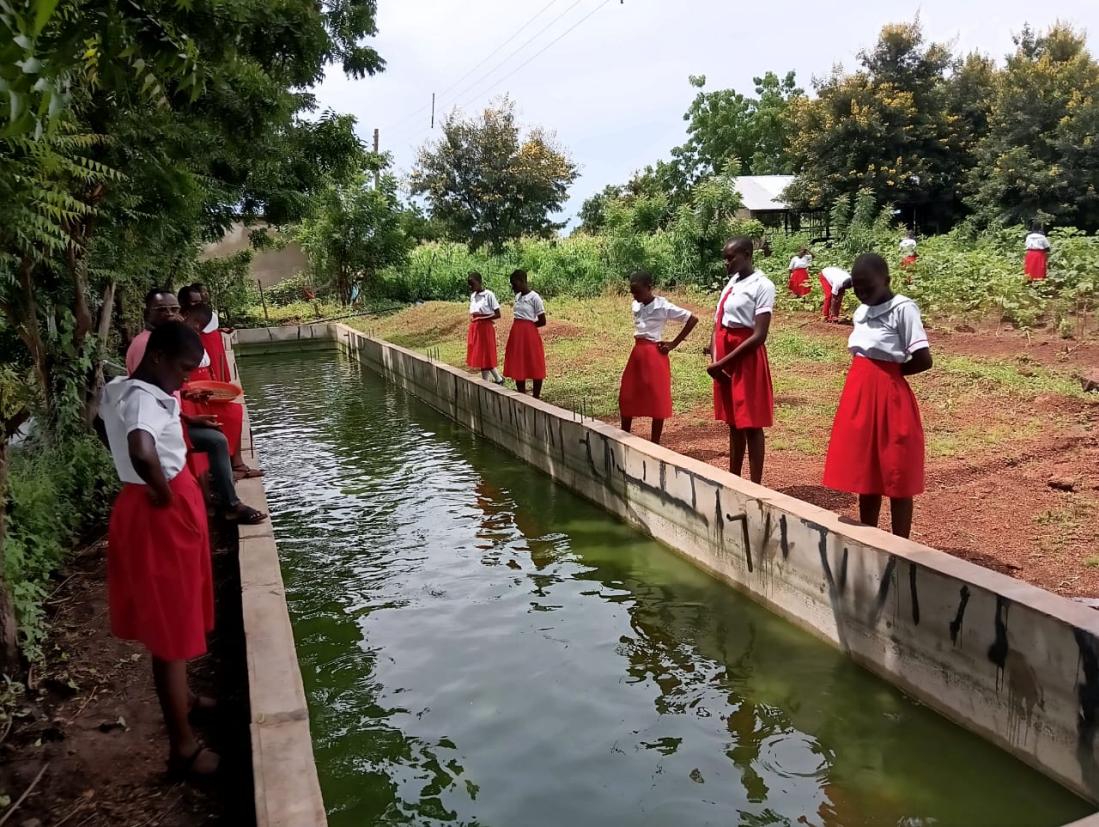
Students at the COSTECH school fish pond, where clean water makes the whole cycle possible.
The ripple
From a single water source, the effects spread outward. Farmers grow where there was only dry ground. Traders stay at the market and sell what they worked for. Schools can grow food for children and teach them essential life skills. This is the same future the Feed Ghana Programme is working toward, and it rests on something simple. The programme sets the country’s ambition; access to clean water is what lets families begin to meet it, one community at a time.
When you support Water for West Africa, you are not only funding a borehole. You are funding the crops it grows and the harvest it brings to market.
Clean water is not simply infrastructure.
It is the first ingredient in everything a community grows.